Hit enter to search or ESC to close
28,Oct,2026
THE BUYER'S GUIDE / SELECTION
Selecting the right stainless steel wire mesh involves matching three interdependent variables — mesh count, wire diameter and opening size — to the demands of your application. This guide explains the key selection criteria, covers the most common weave types and alloy grades, and maps each combination to typical industrial, filtration, architectural and structural end uses. Buyers are shown what to verify before ordering to avoid costly mismatches.
Opening size (aperture): the clear space between wires determines filtration cut point, flow rate, airflow and particle retention. Buyers must define the maximum particle size to be retained or the minimum opening required for their process before selecting a mesh count and wire diameter combination.
Wire diameter and weave pattern: wire diameter governs cloth strength, rigidity and open area percentage; weave pattern (plain, twill, Dutch variants) determines load capacity, filtration precision and cleanability. These two variables interact with mesh count to set the final aperture and must be specified together for demanding filtration or high-pressure duties.
Alloy grade and application domain: the stainless steel grade (304, 304L, 316, 316L, 310, 310S, 314, 321) must match the chemical, thermal and hygiene conditions of the application. Woven cloth suits filtration, screening and architectural uses; welded mesh suits structural, enclosure and construction duties.
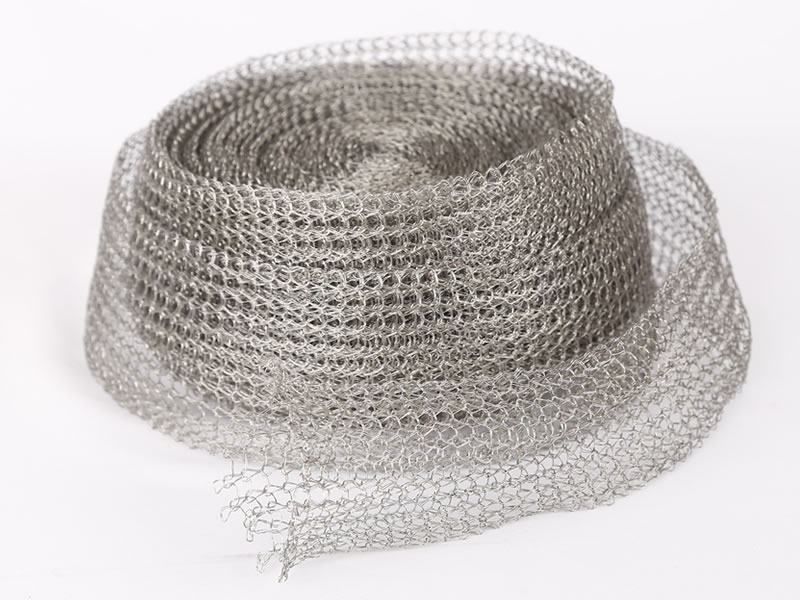
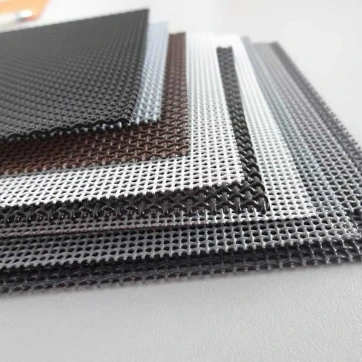
Stainless steel wire mesh is a woven fabric made from stainless steel wire. The wire intersects at right angles, and the geometry of each intersection — how tightly or loosely the wires are crimped and locked — determines what the mesh can hold back, what it lets through, and how much mechanical stress it can bear. Unlike painted or galvanised products, stainless steel mesh derives its corrosion resistance from the alloy itself, so the grade selection is as important as the weave geometry.
Buyers who treat mesh count as the sole specification frequently receive a product that is either too open for the intended filtration duty or too restricted for the required flow rate. Understanding how mesh count, wire diameter and opening relate to each other prevents this class of error.
The opening — also called the aperture — is the clear space between adjacent wires. It directly controls the largest particle or fluid droplet that can pass through the cloth. For filtration duties the opening must be smaller than the particle you need to retain. For ventilation or screening duties the opening controls both airflow and sight-line.
The table below is drawn from confirmed plain-weave specifications for stainless steel wire mesh available from ANPING YUANDONG METAL PRODUCT CO.,LTD.:
| Mesh/inch | Wire Diameter (mm) | Opening (mm) |
|---|---|---|
| 1 | 3.0 | 22.4 |
| 2 | 1.5 | 11.2 |
| 4 | 1.0 | 5.35 |
| 6 | 0.9 | 3.33 |
| 10 | 0.6 | 1.94 |
| 14 | 0.5 | 1.31 |
| 20 | 0.45 | 0.82 |
| 24 | 0.35 | 0.71 |
| 30 | 0.25 | — |
As mesh count rises, opening size falls. However, at a given mesh count, a heavier wire diameter reduces the opening further while increasing cloth strength. Buyers specifying both mesh count and wire diameter independently can fine-tune the opening for their process requirements.
Wire diameter governs tensile strength, rigidity and open area percentage. A coarser wire at the same mesh count closes down the aperture and stiffens the panel; a finer wire opens the aperture and increases flexibility. This trade-off matters in:
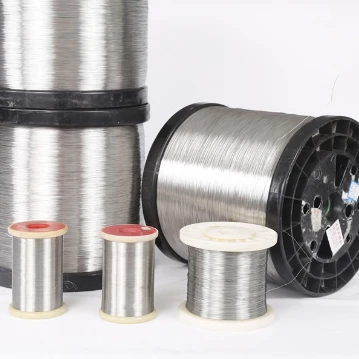
Stainless steel wire used in mesh weaving is available in diameters from 0.03 mm to 5.0 mm, drawn from alloys including 304, 304L, 316, 316L, 310, 310S and 321.
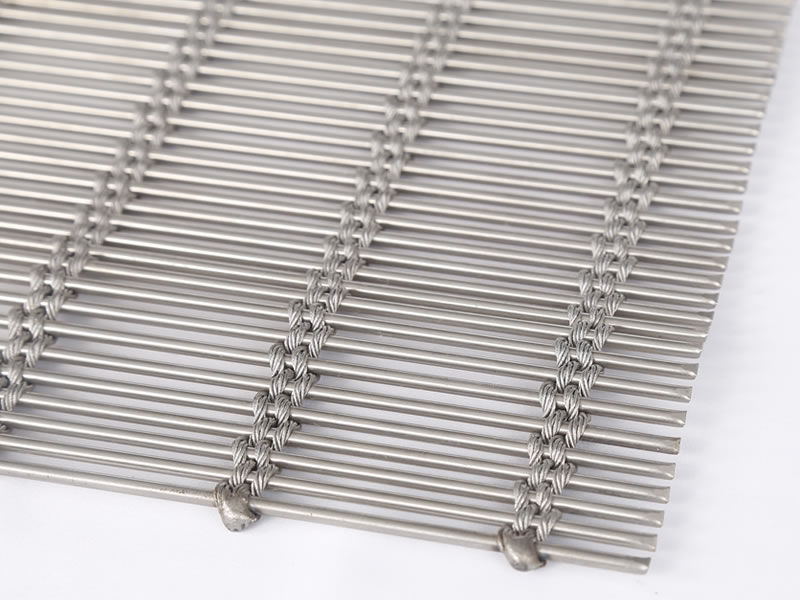
The weave type affects both mechanical performance and filtration behaviour independently of mesh count and wire diameter:
Choosing the wrong weave for a demanding filtration environment can result in premature blinding (clogging) or structural failure under pressure cycles.
Stainless steel grade selection governs corrosion resistance, temperature performance and compatibility with process media. Confirmed grades available in woven mesh form include 304, 304L, 316, 316L, 310, 310S, 314 and 321. Buyers handling chloride-rich environments, marine exposure or aggressive chemical processes typically require 316 or 316L. Higher-temperature duties may indicate 310 or 310S. Grade selection should be confirmed against the specific chemical and thermal environment; no general guidance here overrides a process engineering assessment.
Once opening, wire diameter, weave and grade are defined, verify that the combination matches the intended domain:
The core woven product is available in plain, twill, Dutch, reverse Dutch, twilled Dutch and crimped weave patterns. Alloy options span 304, 304L, 316, 316L, 310, 310S, 314 and 321. Cut-to-size lengths are available, making partial-roll ordering economical. The confirmed plain-weave specification table (see Section 1) covers mesh counts from 1 to 30 mesh/inch, with wire diameters from 0.25 mm to 3.0 mm and openings from sub-1 mm up to 22.4 mm.
This product is suited to chemicals, pharmaceuticals and machine making as primary application categories.
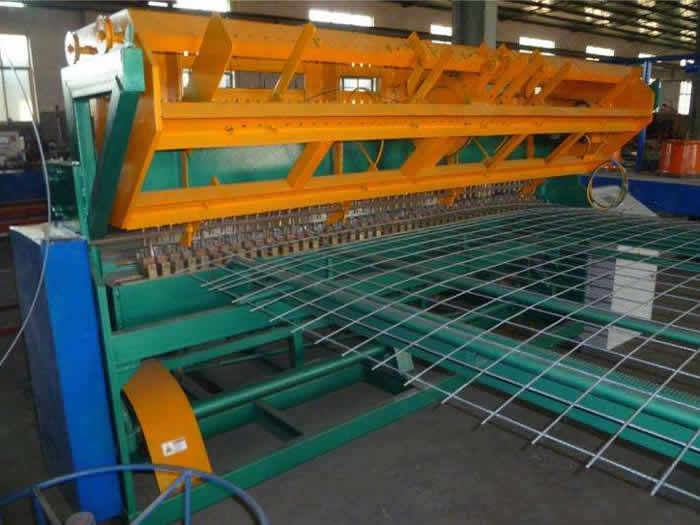
For applications requiring greater panel rigidity — construction, garden enclosures, zoos, playgrounds, machine guards, fencing — welded wire mesh is the appropriate choice rather than woven cloth. The welded product is fabricated from 201, 202, 304, 304L, 316, and 316L wire in diameters from 0.5 mm to 2.0 mm. Panel widths run from 0.5 m to 2.0 m; standard roll lengths are approximately 30 m. Aperture options include 1/4", 1/2", 3/4", 3/8", 5/8", 1", 1.5", 2", 3", 4", 5" and 6". The welded structure resists loosening even when the mesh is cut to size or subjected to local point loads.
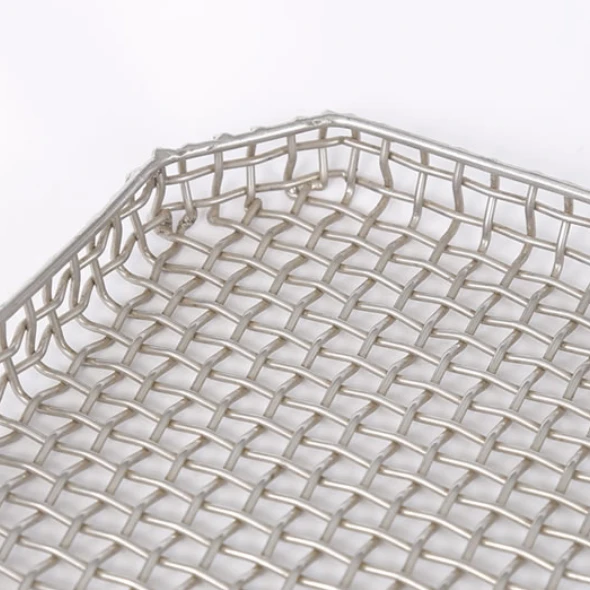
For buyers requiring a fabricated end product rather than a raw mesh, woven and welded stainless steel cloth is deep-processed into baskets, turnover boxes and specialist containers. Grades 304, 304L, 316 and 316L are used. Surface treatment by electrolytic polishing provides a mirror-bright, corrosion-resistant, non-toxic finish. Applications include industrial wash baskets, catering utensils, laboratory disinfection trays and household storage.
Before submitting an enquiry to a wire mesh supplier, confirm the following:
Stainless steel wire mesh is not a single product: it is a family of woven and welded fabrics whose performance is determined by the interaction of opening size, wire diameter, weave pattern and alloy grade. Matching these four variables to the target application — filtration, screening, construction, architecture or fabricated component — is the essential decision a buyer must make before ordering. The specification tables and weave descriptions in this guide are drawn from confirmed product data and are intended to support that decision, not to replace a direct technical discussion with the supplier.
THE PEOPLE

About the author
THE COMPANY
Exquisite Metal Wire Design Combined With Functionalities Welcome to Anping Yuandong Metal Product Co., Ltd. We are engaged in manufacture and export of wire mesh products since 1997. Our wire mesh factory is located in Anping County of Hebei Province, which is well known for manufacturing and exporting wire mesh in China.…
About Us ↗Visit company website ↗YOUR NEXT STEP
Use case, specification, quantity and delivery window: make the next conversation specific.
JOIN OUR NEWSLETTER