Hit enter to search or ESC to close
27,Feb,2026
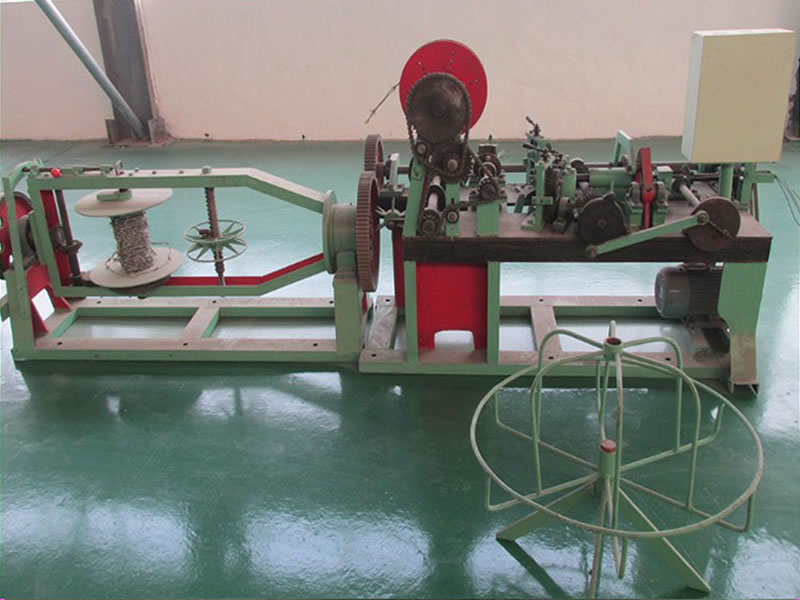
The global demand for welded wire mesh products has expanded rapidly across construction, infrastructure, agriculture, transportation, mining, and industrial manufacturing. Behind this growth lies the technological advancement of the welded wire mesh machine, which has evolved from basic mechanical welders into highly automated deep-processing systems. Today’s manufacturers are not only producing mesh panels but are also integrating advanced automation, intelligent control systems, and precision engineering to enhance productivity, accuracy, and customization capabilities.
Modern equipment such as the welded wire mesh making machine, automatic welded wire mesh machine, mesh welding machine, and automatic wire mesh welding machine represents a new stage of deep-processing manufacturing. Particularly, the development of the welded wire mesh machine in China has significantly influenced the global market, combining cost efficiency with technological innovation.
This article explores the deep-processing direction of welded wire mesh machinery, focusing on equipment structure optimization, intelligent automation, value-added system integration, and global export-oriented manufacturing.
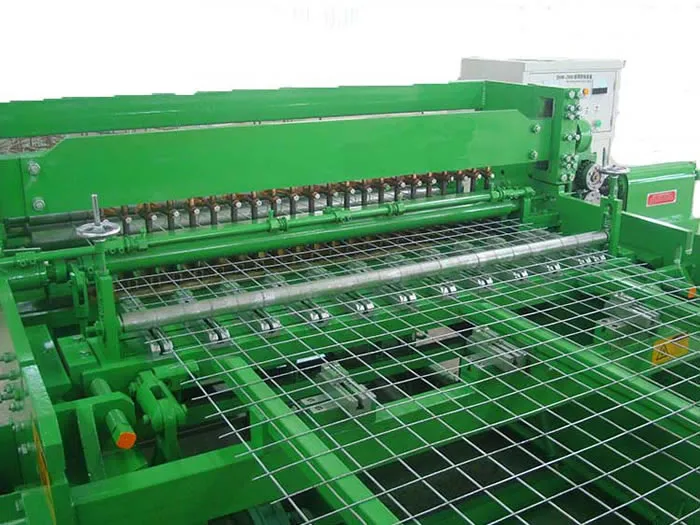
The core of any welded wire mesh machine lies in its mechanical stability and welding precision. Deep processing in machinery manufacturing refers to the refinement of every structural component to ensure high-speed operation, consistent weld quality, and long-term durability.
Frame Design and Mechanical Stability
High-performance mesh welding machine systems are built with heavy-duty steel frames processed through CNC machining centers. The use of precision milling and stress-relief heat treatment ensures structural rigidity and reduces vibration during high-speed welding operations. A stable frame directly affects welding accuracy and mesh uniformity.
In deep-processing production lines, the machine body is often modularized. This allows manufacturers to adjust working width, wire diameter range, and mesh spacing configuration according to customer requirements. Reinforced crossbeams and linear guide rails enhance alignment precision and reduce maintenance frequency.
Advanced Welding Transformer Technology
The welding transformer is a critical component in any welded wire mesh making machine. Modern systems utilize high-efficiency copper transformers combined with digital control modules. These allow precise adjustment of welding current and welding time, ensuring strong and uniform weld joints.
In deep-processing equipment manufacturing, water-cooling systems are integrated into the welding electrodes to maintain stable operating temperatures during continuous production. This significantly extends electrode lifespan and ensures consistent weld penetration even under heavy workloads.
Servo Motor and CNC Control Integration
The transition from mechanical cam systems to servo-driven control systems marks a significant step forward in automatic welded wire mesh machine development. Servo motors provide accurate positioning of longitudinal and cross wires, enabling adjustable mesh sizes without manual mechanical modification.
CNC control panels with touch-screen interfaces allow operators to input mesh specifications, wire diameter, welding time, and production speed. This digitalization reduces human error and increases production flexibility, which is essential in deep-processing customization.
Automation is a defining feature of modern automatic wire mesh welding machine technology. Deep processing now includes the integration of feeding systems, cutting systems, stacking units, and real-time monitoring mechanisms.
Automatic Wire Feeding and Straightening Systems
High-quality mesh production requires precisely straightened wires. Advanced welded wire mesh machine systems are equipped with automatic wire straightening and feeding units. These units use multi-roller straightening technology to eliminate curvature and ensure smooth feeding into the welding area.
For cross wires, hopper-based automatic dropping systems are commonly used. These systems precisely position each cross wire before welding, ensuring consistent spacing accuracy. Fully automated feeding significantly increases production efficiency and reduces labor dependency.
High-Speed Production and Continuous Operation
Modern automatic welded wire mesh machine systems can achieve production speeds of up to 60–120 welding cycles per minute, depending on wire diameter and mesh size. Deep-processing innovations focus on balancing speed with welding strength.
To support continuous operation, advanced cooling systems, overload protection devices, and fault-detection sensors are integrated. Intelligent monitoring systems track welding current fluctuations and automatically adjust parameters to maintain quality consistency.
Integrated Cutting and Stacking Units
After welding, mesh panels must be cut to size and stacked. A fully integrated mesh welding machine production line includes automatic cutting blades synchronized with the welding cycle. Precision cutting ensures smooth panel edges without deformation.
Stacking robots or pneumatic stacking devices collect finished panels neatly, improving workplace safety and efficiency. This integrated deep-processing approach transforms the machine from a standalone welder into a complete mesh manufacturing system.
As global markets demand higher-quality and specialized mesh products, deep processing in welded wire mesh machine in China manufacturing has expanded significantly. Chinese manufacturers have become key suppliers in the global market by combining innovation with competitive pricing.
Custom Mesh Solutions for Diverse Industries
Different industries require specific mesh configurations. Construction projects may require reinforced concrete mesh with precise spacing, while agricultural fencing demands lighter wire gauges and corrosion-resistant coatings.
Advanced welded wire mesh making machine systems allow adjustable wire diameters, variable mesh spacing, and programmable welding parameters. This flexibility enables manufacturers to serve multiple industries with a single production line.
Deep-processing capabilities also include integration with galvanizing lines or powder-coating systems, allowing manufacturers to offer finished mesh products rather than semi-finished panels.
Export-Oriented Equipment Design
The success of the welded wire mesh machine in China is partly due to export-focused manufacturing strategies. Equipment is designed with standardized container dimensions to reduce shipping costs. Modular assembly structures simplify overseas installation and maintenance.
Comprehensive quality control procedures are implemented, including welding strength testing, electrical safety inspection, and servo positioning calibration. Machines are often certified under CE or ISO standards to meet international market requirements.
Additionally, multilingual control interfaces and remote technical support systems enhance customer satisfaction and long-term cooperation.
Intelligent Upgrades and Industry 4.0 Integration
The next stage of deep processing involves smart manufacturing. Advanced automatic wire mesh welding machine systems are being integrated with PLC-based data collection systems. Production data such as output volume, welding current stability, and equipment operation time can be monitored in real time.
Some high-end models support remote diagnostics, allowing engineers to troubleshoot software or electrical issues online. This reduces downtime and improves operational reliability.
Energy efficiency is another focus area. Inverter-based welding control systems reduce power consumption compared to traditional transformer systems. Optimized electrode pressure systems minimize material waste and extend machine lifespan.
The evolution of the welded wire mesh machine industry continues to align with global manufacturing trends. Lightweight structural optimization, higher automation levels, and digital integration are shaping the future of mesh production.
Robotic loading systems, AI-based weld quality inspection, and fully automated production lines are becoming more common. These technologies reduce labor intensity while improving precision and repeatability.
Furthermore, environmentally sustainable manufacturing processes are gaining attention. Energy-saving welding transformers, recyclable packaging materials, and reduced-emission production workshops are increasingly implemented in modern facilities.
As infrastructure development and industrial expansion continue worldwide, demand for reliable mesh products will remain strong. Advanced automatic welded wire mesh machine systems will play a central role in meeting this demand efficiently and sustainably.
The transformation of the welded wire mesh machine, welded wire mesh making machine, automatic welded wire mesh machine, mesh welding machine, automatic wire mesh welding machine, and welded wire mesh machine in China reflects the broader trend toward deep-processing industrial manufacturing. Through structural reinforcement, precision control systems, intelligent automation, and export-oriented customization, modern mesh machinery has evolved into highly sophisticated production systems.
Deep processing not only enhances machine performance and durability but also increases production flexibility and global competitiveness. As technology continues to advance, welded wire mesh machinery will remain a critical component in construction, infrastructure, and industrial manufacturing sectors worldwide.
JOIN OUR NEWSLETTER