Understanding straight spring wire: Industrial Insights From Years On The Floor
Having worked in the industrial equipment sector for a fair while, I can say that not all spring wires are created equal. Straight spring wire — and yes, that very simple sounding term — tends to be one of those components that silently carries a heavy load. Frankly, it’s the backbone for countless applications, from automotive suspension parts to complex mechanical assemblies, yet few outside the sector really appreciate its subtleties.
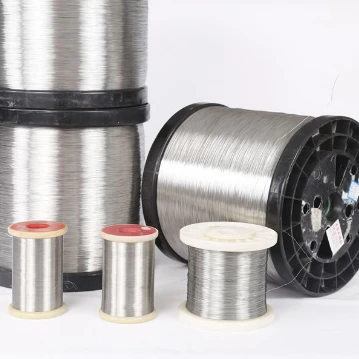
What strikes me first about this wire is its purity of purpose. Straight spring wire, as opposed to coiled or bent varieties, comes perfectly linear. It’s designed that way to be further processed into precise springs or wire-formed components. That level of uniformity means manufacturers can count on its consistency, an absolute must when tolerance margins are tight. So, when you see specs about tensile strength or elongation, don’t gloss over them — they’re crucial.
In my early days on the floor, I remember a project where delays in spring wire delivery literally halted assembly lines. Not because the wire lacked strength or quality, but because the diameter variation was off. From then on, I took a closer look at the testing processes that suppliers undertake. The wire has to pass rigorous extrusion and annealing procedures, then get tested for yield strength and fatigue resistance. It’s a bit like metallurgy meets quality control, which frankly — in industrial production — decides if your product makes it to market on time or not.
Materials, too, make a difference. The predominant types used for straight spring wire tend to be high-carbon steel or stainless steel alloys. High-carbon spring wires offer excellent tensile strength and excellent fatigue performance, while stainless steel is preferred under corrosive environments or in medical devices. Both demand exacting manufacturing controls. Oddly enough, I’ve noticed many engineers emphasize the carbon content percentages because even a fraction of a percent shift can alter spring performance by a noticeable margin.
Let me share a little nugget from a recent client consultation. They were sourcing stainless steel straight spring wire for a new line of precision surgical tools. What mattered most wasn’t just strength but surface finish too — the smoother, the better, to avoid any contamination risk. That’s why manufacturers who offer additional polishing or coating services alongside standard tensile specs often win the contract. An example where the wire isn’t just wire — it’s part of a highly critical healthcare application.
| Specification |
Typical Range |
Remarks |
| Diameter |
0.2mm – 12mm |
Standard sizing with tight dimensional control |
| Material |
High Carbon Steel, Stainless Steel |
Choice depends on environment & application |
| Tensile Strength |
1400 - 2600 MPa |
Varies with heat treatment and alloy |
| Elongation (%) |
2 - 15% |
Reflects ductility and fatigue resistance |
| Surface Finish |
Bright, Matte, Polished |
Critical for medical & food industry |
Now, talking suppliers — I’ve worked directly with several vendors over the years and noticed some patterns worth sharing. Obviously, price matters, but frankly, reliability, product consistency, and after-sales support are what keep partnerships running smoothly. The difference between an okay wire and one that performs flawlessly in your machine setup often boils down to those intangible factors.
| Vendor |
Product Range |
Quality Certifications |
Lead Time |
Customer Service |
| Hebei Wire Mesh Co. |
Wide (0.2mm-12mm diameter) |
ISO 9001, RoHS |
2-4 weeks |
Responsive, technical support available |
| SpringTech Solutions |
Moderate range |
ISO 9001 |
3-5 weeks |
Good, but less technical help |
| Global Wire Works |
Extensive |
ISO 9001, ISO 14001 |
4-6 weeks |
Excellent, but pricier |
It's often said that spring wire is a “hidden hero” of manufacturing — I suppose there’s truth there. If the wire isn’t right, the whole spring won’t hold up under stress. I remember a particular case when a mid-sized automation firm switched from generic wire to a higher-grade straight spring wire. They reported a 15% reduction in spring failure rates within a year, which, you know, saved them massive headaches and warranty costs.
Looking ahead, the demand for more specialized materials—like high-temperature alloys or bio-compatible wires—will probably keep rising. Manufacturers that can keep combining material science with precise control over production will stand out. Also, sustainability is no longer just a buzzword; more clients expect transparent sourcing and environmentally friendlier processes.
All in all, it feels like straight spring wire may appear simple, but it’s packed with complexity and opportunities for innovation. The neat thing? There’s always something to learn, or a supplier to test, or a new technique to try. If you get the wire right, the rest often falls into place — that’s the reality I’ve seen time and again.
Thanks for reading; feel free to check out Hebei Wire Mesh’s offerings if you need quality spring wire that’s tried and tested in tough conditions.
References:
- ASM International. (2020). Metallurgy of Spring Wire.
- Industry Today. (2023). Advances in Precision Wire Manufacturing.
- Hebei Wire Mesh Company Technical Data Sheets and Buyer Guides.