Hit enter to search or ESC to close
22,May,2026
Modern prisons require highly secure perimeter protection systems to prevent escapes, stop unauthorized access, and maintain public safety. Among the most effective security solutions used in correctional facilities are military concertina wire, prison razor wire, and prison razor wire fence systems. These security barriers are designed to create both physical and psychological deterrence, making them essential components in maximum-security prisons, detention centers, and correctional compounds around the world.
The increasing demand for prison security has encouraged correctional institutions to adopt stronger fencing technologies. Traditional fencing systems alone are often insufficient to stop determined escape attempts. As a result, modern prison facilities rely heavily on reinforced razor wire systems to improve perimeter defense and reduce security risks. The use of advanced steel materials, anti-corrosion coatings, and integrated monitoring technologies has further enhanced the effectiveness of these security products.
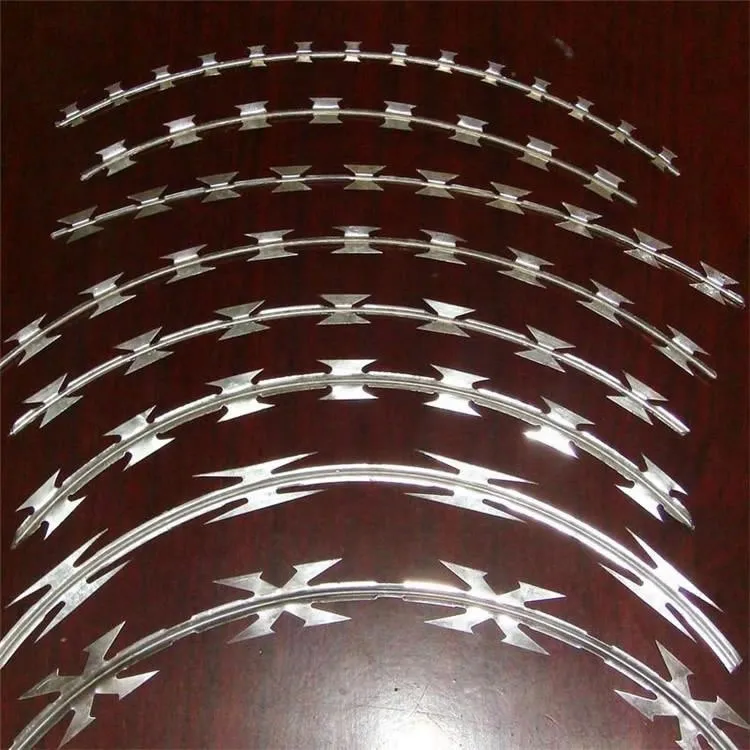
Military concertina wire is one of the most widely used perimeter security materials in correctional facilities. Originally developed for military defense applications, this type of razor wire has become highly valuable in prison environments because of its superior strength, durability, and deterrent effect.
The structure of military concertina wire consists of coiled high-tensile steel wire fitted with sharp razor blades at regular intervals. When expanded, the wire forms large circular coils that are extremely difficult to cross, cut, or climb over. In prison applications, the wire is typically installed on perimeter fences, concrete walls, gates, and restricted areas within the facility.
One of the main advantages of military concertina wire is its ability to create a strong physical barrier. Inmates attempting to escape face serious obstacles due to the sharp blades and dense coil structure. Unlike ordinary barbed wire, concertina wire forms overlapping loops that significantly increase the level of security protection.
In addition to physical resistance, military concertina wire also acts as a psychological deterrent. The visible presence of razor-sharp steel blades discourages escape attempts because inmates understand the high risk of injury. Prison administrators often consider visual deterrence an important factor in maintaining order and discipline inside correctional facilities.
Another important benefit is rapid deployment. During prison emergencies, riots, or temporary security upgrades, military concertina wire can be installed quickly and efficiently. Because the wire is compressed into compact coils during transportation, it is practical for both permanent and temporary prison security operations.
Durability is also a key feature of military concertina wire. Most products are manufactured from galvanized steel or stainless steel, allowing them to resist rust, corrosion, and harsh environmental conditions. Since prisons operate continuously under different weather conditions, long-lasting perimeter security materials are essential for reducing maintenance costs and ensuring long-term reliability.
Modern correctional facilities often integrate military concertina wire with advanced surveillance technologies. Security cameras, infrared sensors, motion detectors, and alarm systems are commonly connected to perimeter fencing systems. If an inmate attempts to tamper with the barrier, prison authorities can immediately detect and respond to the threat.
Furthermore, different prison security levels require different wire configurations. Maximum-security prisons may use thicker wire diameters, tighter coil spacing, and larger razor blades for stronger protection. Medium-security facilities may choose lighter configurations while still maintaining effective perimeter control.
The flexibility of military concertina wire makes it suitable for a wide variety of prison environments. It can be installed on flat terrain, sloped landscapes, urban detention facilities, and remote correctional compounds. This adaptability has contributed to its widespread use in prison security projects worldwide.
A prison razor wire fence combines reinforced fencing structures with razor wire barriers to create a complete perimeter security system. These systems are specifically designed for correctional facilities where high-security standards are required.
The basic structure of a prison razor wire fence typically includes steel mesh panels, reinforced support posts, and multiple layers of prison razor wire installed at the top or between fence lines. Some prisons use double-fence systems with a monitored security zone between the barriers. This layered design makes escape attempts far more difficult and increases overall perimeter control.
One of the primary advantages of prison razor wire is its anti-climbing capability. The sharp blades prevent inmates from gaining stable handholds or footholds while attempting to scale the fence. Even with cutting tools, penetrating the barrier is extremely difficult due to the high-strength steel construction.
Another important advantage of a prison razor wire fence is visibility. Unlike solid concrete walls, mesh fencing allows prison guards and surveillance systems to maintain clear lines of sight around the perimeter. This improved visibility helps security personnel monitor inmate activity and detect suspicious behavior more effectively.
High-quality prison razor wire products are designed for long-term outdoor use. Galvanized and stainless steel materials provide excellent resistance to corrosion, UV exposure, rain, and temperature fluctuations. This durability is especially important for prisons located in coastal regions, deserts, or areas with severe weather conditions.
Maintenance efficiency is another major benefit. Once properly installed, a prison razor wire fence requires relatively little maintenance compared to traditional security barriers. This reduces operational costs for correctional institutions while ensuring continuous perimeter protection.
Modern prisons increasingly combine prison razor wire fence systems with electronic security technologies. Vibration detection sensors can identify cutting or climbing attempts, while thermal imaging cameras improve nighttime surveillance. Some advanced correctional facilities also use artificial intelligence systems to analyze movement patterns near the perimeter and automatically alert security staff to potential threats.
In addition to perimeter protection, prison razor wire is often used inside correctional facilities to secure restricted areas such as control zones, equipment storage areas, isolation units, and service corridors. This internal use further enhances prison security by limiting unauthorized movement within the facility.
The design flexibility of prison razor wire fence systems also allows customization according to prison requirements. Fence height, wire density, support structure strength, and blade design can all be adjusted based on security needs. Maximum-security prisons usually require higher and stronger barriers, while lower-security detention centers may use lighter configurations.
Environmental sustainability has also become a growing consideration in modern prison construction. Many manufacturers now produce eco-friendly galvanized coatings and recyclable steel materials for prison razor wire products. Longer service life reduces replacement frequency and minimizes environmental impact.
As correctional facilities continue to modernize, the future of military concertina wire and prison razor wire fence systems is expected to involve greater technological integration and material innovation. Security threats are constantly evolving, and prison authorities are investing in smarter perimeter protection solutions to improve operational efficiency and safety.
One important trend is the development of intelligent fencing systems. Future prison razor wire fence installations may include fully integrated sensor networks capable of real-time monitoring and automated threat analysis. These systems can immediately detect climbing attempts, cutting activities, or suspicious movement near the perimeter.
Artificial intelligence and data analytics are also becoming increasingly important in prison security management. Smart surveillance systems connected to military concertina wire barriers can analyze behavioral patterns and identify potential escape risks before incidents occur. This proactive approach improves overall prison safety and reduces response times.
Material technology is another area of innovation. Manufacturers are developing stronger and lighter steel alloys with improved corrosion resistance. Advanced protective coatings can extend the service life of prison razor wire products while reducing maintenance requirements. These improvements are especially valuable for prisons operating in harsh climates.
Automation is expected to play a larger role in future correctional security systems. Drones equipped with cameras and thermal sensors may patrol perimeter fences automatically, while centralized monitoring platforms allow prison authorities to oversee multiple security zones simultaneously.
Despite technological advancements, the core purpose of military concertina wire, prison razor wire, and prison razor wire fence systems will remain unchanged. Their primary function is to establish secure boundaries that protect prison staff, inmates, and surrounding communities from security threats.
In conclusion, military concertina wire and prison razor wire fence systems are essential components of modern correctional facility security. Their ability to provide strong physical barriers, psychological deterrence, and compatibility with advanced monitoring technologies makes them highly effective in prison applications. As prison security standards continue to evolve, these perimeter protection systems will remain critical tools for maintaining safety, order, and operational control in correctional environments worldwide.
JOIN OUR NEWSLETTER